Hungary is a captivating European destination known for its rich history, vibrant culture, stunning Budapest attractions, famous thermal baths, excellent food and wine, and strong value for money. Beyond Budapest, places like Lake Balaton, Eger, Debrecen, Szentendre, and Hortobágy National Park offer diverse experiences, from lakeside relaxation and wine tasting to traditional festivals and natural landscapes. With comfortable spring and autumn weather, efficient transport, and plenty to explore in a 4–7 day trip, Hungary is an ideal choice for both first-time and seasoned Eastern Europe travellers.
Hungary doesn't make a loud case for itself. It doesn't need to.
There's no single famous landmark that dominates every travel conversation about the country. No one experience that everyone immediately associates with it. What Hungary does instead is accumulate. A thermal bath on a cold morning. The Danube river Hungary splits Budapest across, reflecting the Parliament building's lights at dusk. A glass of Tokaji wine in a cellar that's been storing it since the 17th century. The chain of small surprises that builds across a few days into something genuinely difficult to forget.
This Hungary travel guide covers what the country actually delivers, from Budapest attractions that live up to their reputation to the quieter corners of Hungary tourist destinations that most travellers never find on the first visit.
Top Reasons Why You Shouldn’t Miss Out on Visiting Hungary
1. Rich History and Culture
Hungary has been at the crossroads of European history for over a thousand years, and the evidence is everywhere if you know where to look.
Roman settlement left archaeological traces across the country, most visibly in the ruins of Aquincum in what is now Budapest's Óbuda district. Ottoman occupation for 150 years shaped the architecture, the thermal bath culture, and parts of the cuisine in ways that are still visible. The Austro-Hungarian Empire left behind grand boulevards, opera houses, and coffee house traditions that Budapest still takes seriously. None of this feels like museum-piece history. It's the actual fabric of how the cities look and how people live in them.
Hungarian folk music and dance add another layer entirely. The tradition that Béla Bartók spent his career documenting in the early 20th century is still performed and taught, particularly in rural areas and in the folk dance houses, táncházak, that operate in Budapest throughout the year. An evening in one of these is among the more unexpected and genuinely enjoyable things to do in Hungary.
2.Budapest: The City That Earns Its Reputation
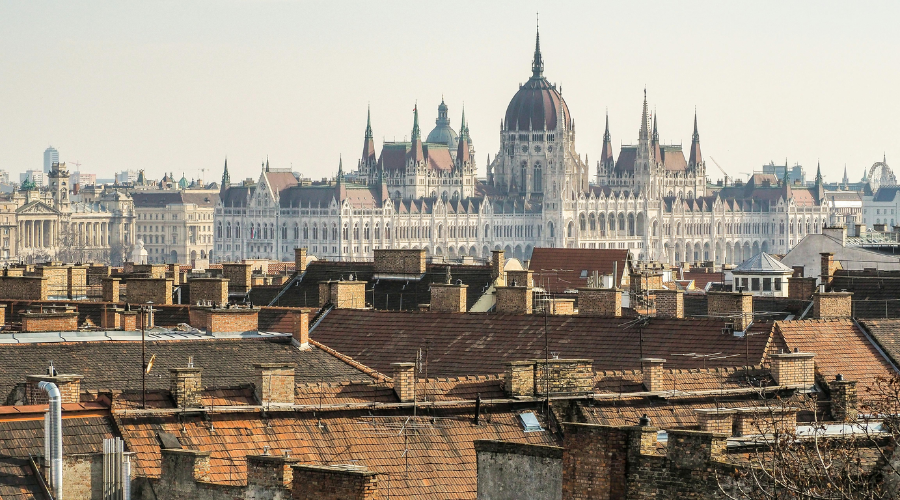
Budapest gets called the Paris of the East often enough that the comparison has become slightly tired. It's worth setting that aside and describing what the city actually is.
The Danube river Hungary's capital is built around splits the city into two distinct halves with genuinely different characters. Buda sits on the western bank, hilly and residential, with Buda Castle rising above the river and Fisherman's Bastion offering the kind of panoramic views across the water to the Parliament building that make people stand still for longer than they planned. Pest spreads out across the flat eastern bank, more urban and energetic, with the great boulevard ring, the ruin bars of the Jewish Quarter, the Central Market Hall, and most of the city's restaurant and café life.
Budapest attractions cover a range that few European capitals of similar size manage. The Hungarian Parliament Building is one of the largest parliament buildings in the world and arguably the most beautiful from the outside, particularly at night when it's fully illuminated along the riverbank. Buda Castle houses the Hungarian National Gallery and the Budapest History Museum within a complex that has been rebuilt and modified across seven centuries. Heroes' Square on the edge of City Park frames a millennium of Hungarian history across its colonnade.
The café culture deserves specific mention in any Hungary travel guide worth reading. The historic coffee houses, the New York Café, the Central Kávéház, the Gerbeaud on Vörösmarty Square, are not tourist traps in the pejorative sense. They're working expressions of a café tradition that Budapest takes more seriously than almost any other European city outside Vienna.
Key Budapest attractions:
- Hungarian Parliament Building, particularly from the river or on a guided interior tour
- Buda Castle and the Castle District
- Fisherman's Bastion for the best view across the Danube
- Heroes' Square and the Millennium Monument
- The Great Synagogue on Dohány Street, the largest in Europe
- The Central Market Hall for food, paprika, and local produce
- The ruin bars of the Jewish Quarter, particularly Szimpla Kert
3. Thermal Baths and Spas
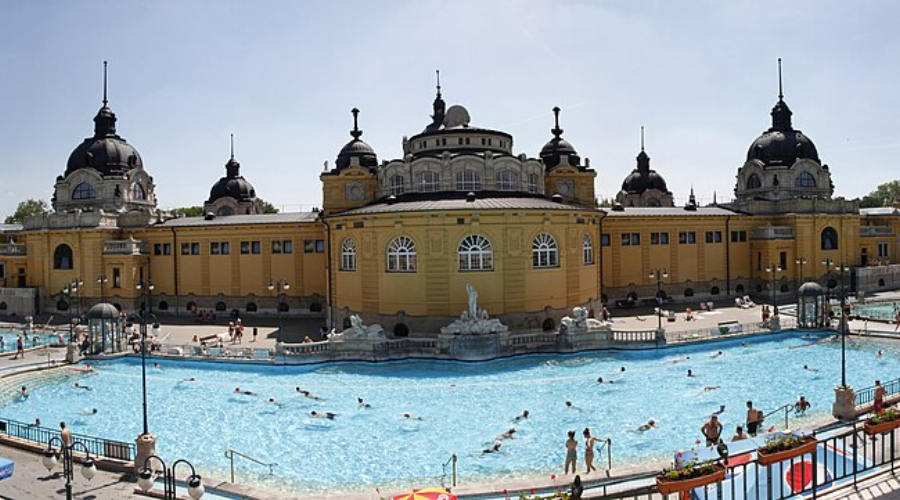
This is the part of any Hungary travel guide that sounds like marketing until you've actually done it.
Hungary sits on one of the richest geothermal areas in Europe. Budapest alone has over 100 springs producing thermal water, which is why the city has been building baths around them since the Roman period and then more extensively during Ottoman rule. The Budapest thermal baths that remain today range from grand neo-Baroque complexes to smaller neighbourhood pools that locals use the way people in other cities use gyms.
Széchenyi Thermal Bath in City Park is the most famous and for good reason. The outdoor pools steaming in cold weather, the chess players floating on boards in the water, the sheer scale of the yellow neo-Baroque building housing it all, creates an experience that exists essentially nowhere else in Eastern Europe travel. The water sits at around 38°C in the outdoor pools and warmer inside.
Gellért Spa on the Buda side, attached to the art nouveau Gellért Hotel, has a different character. More ornate, more formal, with a main pool under a domed glass ceiling that makes the thermal bathing feel ceremonial. The Budapest thermal baths experience at Gellért is worth the slightly higher entry price.
Rudas Baths, built during Ottoman rule in the 16th century, operates a rooftop pool that overlooks the Danube and the Buda hills. Friday and Saturday evenings run as mixed bathing sessions that are a different experience again from the morning visits.
4. Affordable European Travel
Hungary is honest about not being a cheap destination in the way that some Eastern Europe travel articles suggest. Budapest in particular has evolved significantly in the last decade, and certain restaurants, hotels, and experiences sit at pricing that's comparable with Western European cities.
What remains true is that the value-to-quality ratio is genuinely strong. A dinner at a mid-range Hungarian restaurant, dishes like gulyás, halászlé, or lángos, costs a fraction of an equivalent meal in Paris or Amsterdam. A ticket to the Hungarian State Opera, one of the finest opera houses architecturally and acoustically in Europe, is available for single figures in euros for standing places. Wine from Tokaj or Eger, at the source, costs a fraction of what comparable quality costs elsewhere.
The practical mathematics of a Hungary holiday compared to a Western European equivalent of similar length and quality almost always favours Hungary, often significantly. Budget-conscious travellers can also compare Hungary with other cheap countries for backpackers and budget travel when planning an affordable European trip. If you are comparing Hungary with other warm-weather escapes, explore these best summer destinations for a fun getaway to find more ideas for your next holiday.
.
5. Vibrant Festivals and Events
Hungary's festival calendar is fuller than most travellers expect before they look into it.
The Budapest Spring Festival in late March and early April brings classical music, opera, and contemporary performance across venues throughout the city for two weeks. The Hungarian Wine Festival in September takes over Buda Castle for four days of tastings from producers across Hungary's wine regions. The Sziget Festival in August, held on an island in the Danube, is consistently one of Europe's largest and most respected music festivals, drawing international headliners and over 500,000 visitors across its week-long run.
For travellers interested in folk culture, the Busójárás festival in Mohács in February, where participants wear elaborate carved wooden masks and fur costumes to drive away winter, is one of the more extraordinary traditional European festivals still genuinely practised. It's a UNESCO Intangible Cultural Heritage event that manages to feel neither touristy nor staged.
Beautiful Places to Visit in Hungary
Budapest is the obvious starting point for any Hungary travel guide. The country beyond it is where things get quieter and often more rewarding.
Lake Balaton
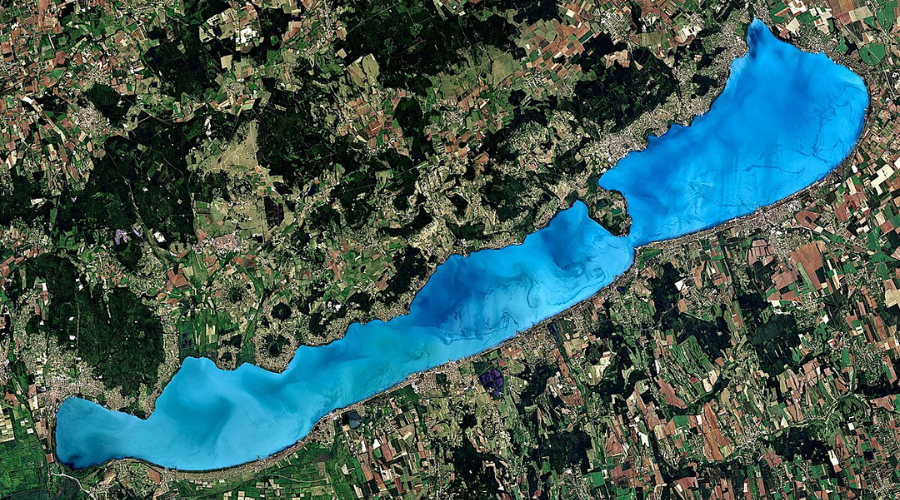
The largest freshwater lake in Central Europe is where Hungarians go on holiday, which is usually a reliable indicator of a destination's quality. The northern shore has the more interesting landscape, with volcanic hills, the peninsula of Tihany with its Benedictine abbey, and a string of wine villages producing Olaszrizling and other local varieties. The southern shore is flatter and more resort-oriented. Either way, Lake Balaton on a summer afternoon, with sailing boats on the water and the hills behind, is one of the more specifically Hungarian things to do in Hungary.
3. Eger
Two hours from Budapest by train, Eger punches considerably above its size. The baroque old town is beautiful without being overrun. Eger Castle, where Hungarian defenders famously repelled Ottoman forces in 1552, overlooks the valley. And the wine cellars of the Valley of the Beautiful Women, Szépasszony-völgy, are accessible on foot from the centre for tastings of Egri Bikavér, the Bull's Blood red blend that the town is famous for. An overnight stay in Eger is more rewarding than a day trip from Budapest for anyone with the time.
4. Debrecen
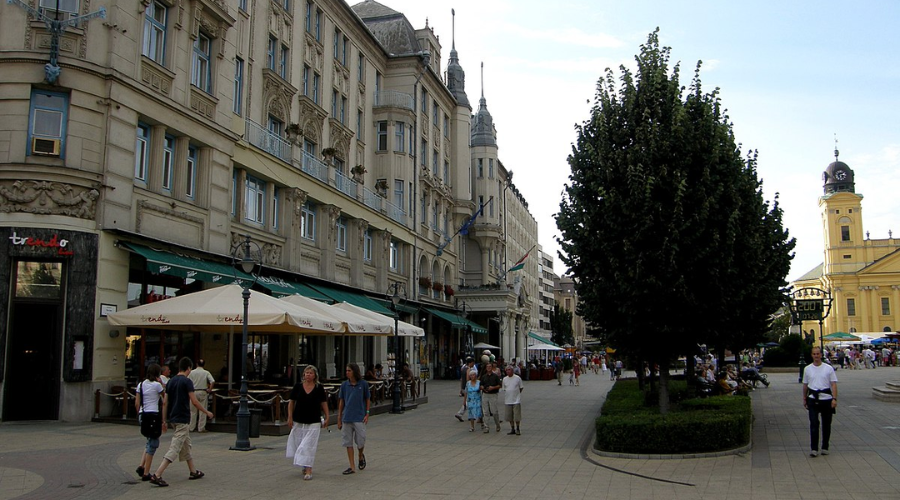
Hungary's second city has a character genuinely its own. The Great Reformed Church on Kossuth Square, where Lajos Kossuth declared Hungarian independence in 1849, anchors a city centre that's worth a day of exploration. The Déri Museum houses one of the more significant Hungarian art collections outside Budapest. Hortobágy National Park, the largest contiguous natural grassland in Europe and a UNESCO World Heritage Site, begins at the edge of the city, offering landscapes and wildlife that feel entirely removed from urban Hungary.
5. Szentendre
Twenty kilometres north of Budapest by suburban rail or boat, Szentendre is the most accessible short trip from the capital. The Serbian Orthodox churches, the cobblestone streets, the art galleries, and the riverside setting make it an easy afternoon. The Hungarian Open-Air Museum on the edge of town, where historic buildings from across the country have been relocated and reconstructed, is one of the better outdoor museums in Central Europe.
Practical Notes for a Hungary Holiday
Best time to visit: April to June and September to October offer the most comfortable temperatures and manageable crowds. July and August are warmer and busier, particularly in Budapest. December brings Christmas markets that are among the better ones in Eastern Europe travel, though the cold is genuine.
Getting around: Budapest's public transport network is excellent and inexpensive. The metro, trams, and buses cover the city comprehensively. Intercity trains connect Budapest to Eger, Debrecen, and the Lake Balaton region reliably. For travellers planning to explore Hungary by train, you can book railway tickets conveniently as part of your trip planning. For routes not covered by your preferred train connection, book bus tickets to explore different parts of Hungary and the surrounding region. A Balaton car circuit is manageable in a day from the right starting point. For convenient airport transfers, local sightseeing, or point-to-point travel, travellers can also book cab services for their Hungary holiday.
Language: Hungarian is genuinely one of the more challenging European languages for most visitors, bearing no resemblance to the neighbouring Slavic or Germanic languages. English is widely spoken in Budapest and at major Hungary tourist destinations. Learning a few words, köszönöm for thank you, remains appreciated beyond the tourist areas.
Currency: Hungary uses the Hungarian Forint rather than the Euro, which catches some visitors off guard. Exchange rates at the airport are consistently unfavourable. ATMs in the city centre or exchange offices in the downtown area offer significantly better rates.
EaseMyTrip offers curated Hungary tour packages that cover flights, accommodation, and guided experiences across Budapest and the country's wider Hungary tourist destinations. Travellers can also book hotels in Budapest and other Hungarian destinations to simplify accommodation planning before their trip. If you are still deciding on your itinerary, these tips on how to plan your next holiday with EaseMyTrip can help you organise flights, accommodation, and other travel arrangements more efficiently. Planning through a single platform makes the logistics of Eastern Europe travel considerably more straightforward.
FAQs About Visiting Hungary
What is the best time to visit Hungary? Spring from April to June and autumn from September to October offer the most comfortable conditions for sightseeing. Summer is warmer and more crowded. December has good Christmas markets but genuine winter cold.
How many days do you need in Hungary? Four to five days covers Budapest well. Add two to three days if planning excursions to Eger, Lake Balaton, or Debrecen. A week allows for a more relaxed pace without feeling rushed.
What are the most important Budapest attractions? The Hungarian Parliament, Buda Castle, Fisherman's Bastion, the Great Synagogue, the Central Market Hall, and the Budapest thermal baths are the core. The ruin bars of the Jewish Quarter are worth an evening specifically.
Which Budapest thermal baths are best? Széchenyi is the most famous and most accessible. Gellért is the most architecturally impressive. Rudas has the best rooftop experience. All three are worth visiting if time allows.
Is Hungary good value for money? Yes, relative to Western European destinations of similar quality. Accommodation, food, wine, and cultural experiences all offer strong value, though Budapest has become more expensive over the past decade than older Eastern Europe travel guides suggest.
What are the best things to do in Hungary outside Budapest? Eger for baroque architecture and wine, Lake Balaton for the largest Central European lake, Debrecen for an authentic Hungarian city experience, and Hortobágy National Park for steppe landscapes and wildlife.
What language is spoken in Hungary? Hungarian. English is widely understood in Budapest and at major tourist sites. A few basic Hungarian phrases go a long way in smaller towns and rural areas.
Is Hungary worth visiting for first-time Eastern Europe travellers? Yes. Budapest is one of the most compelling capitals in Eastern Europe travel and the country beyond it rewards exploration. It works well as a standalone destination or combined with neighbouring countries like Slovakia, Austria, or the Czech Republic.





 September 10, 2024
 Share
Share
 Download as PDF
  From
From 
 Departure Date
 Travellers & class
 Rent For
 Departure Date


 Share
Share 

{{cmnt.comment}}